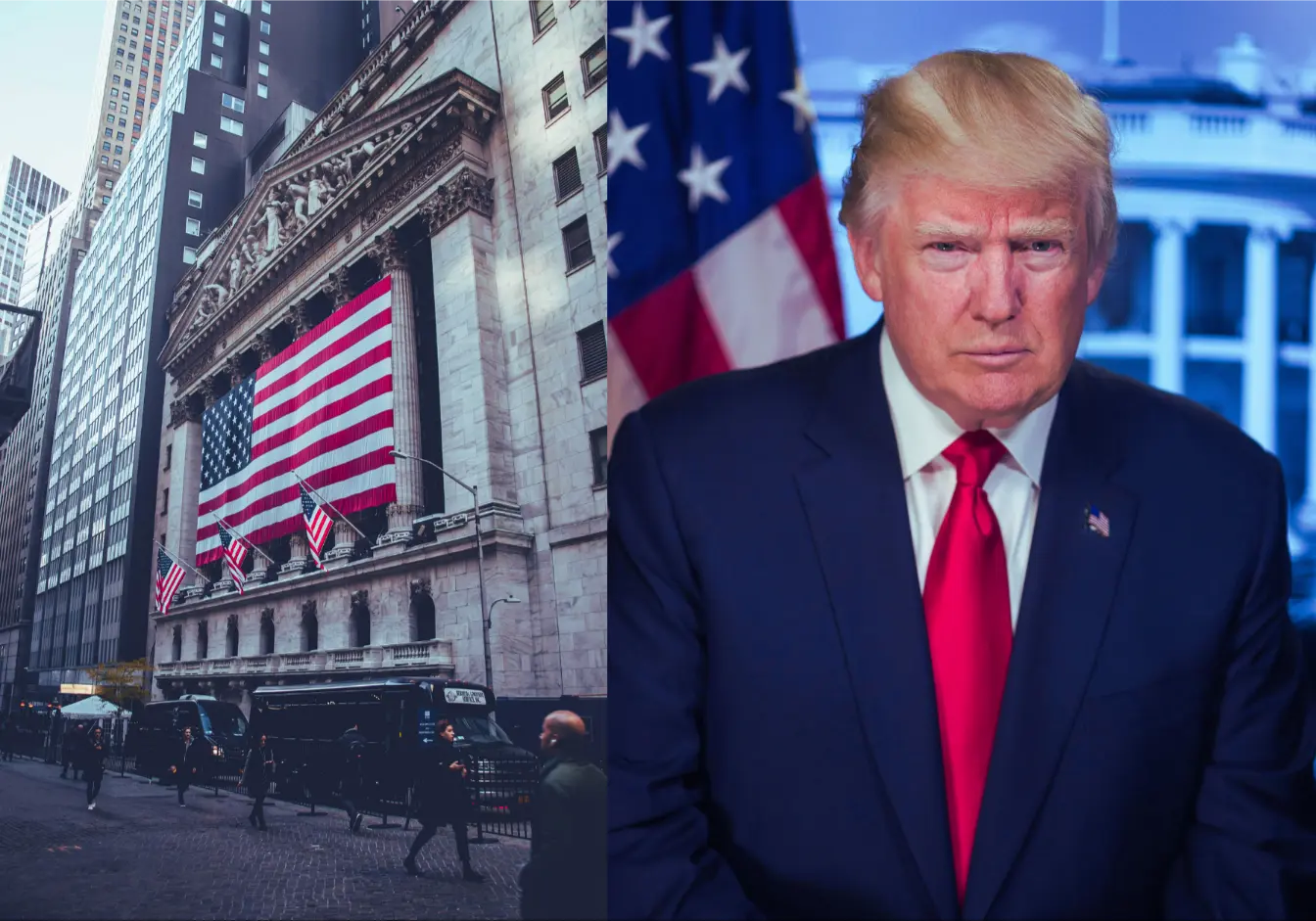
As the possibility of a second Trump term looms on the horizon, the potential impacts on financial markets have become a topic of intense speculation and analysis. With his first term characterized by significant economic policies and market fluctuations, understanding what a reelection could mean for investors and the broader economy is crucial.
In this blog post, we will delve into the key events of Trump’s first term that shaped the financial landscape, explore expert predictions for a second term, and provide you with the insights needed to navigate this complex scenario. By examining past actions and future possibilities, our goal is to equip you with the knowledge to make informed decisions and better understand the potential outcomes of a Trump reelection. Whether you’re an investor, a financial professional, or simply someone interested in the intersection of politics and markets, this analysis aims to offer valuable guidance and clarity.
The 2016 election of Donald Trump marked a significant shift in U.S. political and economic policy, with widespread implications for the financial markets. For investors, understanding the historical impacts of Trump’s first term can provide valuable context. However, with Trump hinting at a potential second term, the future becomes the primary focus. This article delves into Trump’s proposed policies for his next term and explores how these could impact financial markets, with a specific focus on oil, cryptocurrency, and potential corporate mergers like DFS and Capital One.
Historical Context: Key Impacts from Trump’s First Term
Election Night Volatility
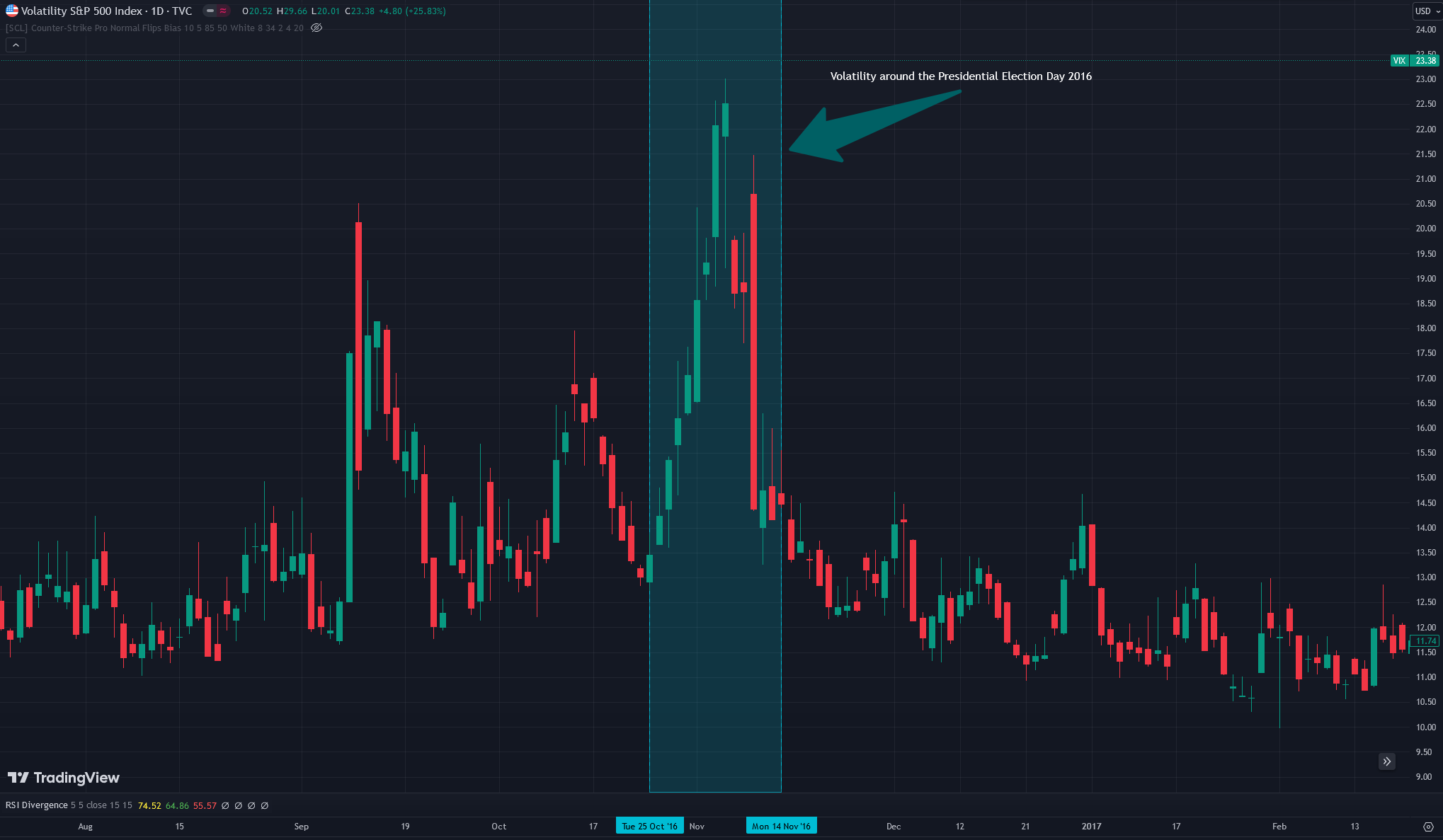
Election nights often bring a mix of anticipation and anxiety for investors, and Trump’s unexpected victory was no exception. On the night of the election, futures markets initially plunged, reflecting widespread uncertainty and fear of the unknown. The Dow Jones Industrial Average futures dropped over 800 points, and similar declines were observed in other major indices. However, by the morning, markets rebounded as investors reassessed the potential impact of Trump’s pro-business policies. A Donald Trump re-election is unlikely to have similar immediate impact on the markets again. The momentum of surprise is not as strong as it was during his first term. Any immediate volatility could therefore be on a way lower level.
SP500 Volatility Index Presidential Election Day 2016
Nevertheless, we were able to observe a spike in volatility that could be used by investors, e.g. through options trading of the Volatility Index (VIX) or other financial products tracking the volatility on the major US-indices.
Short-Term Market Trends Post-Election
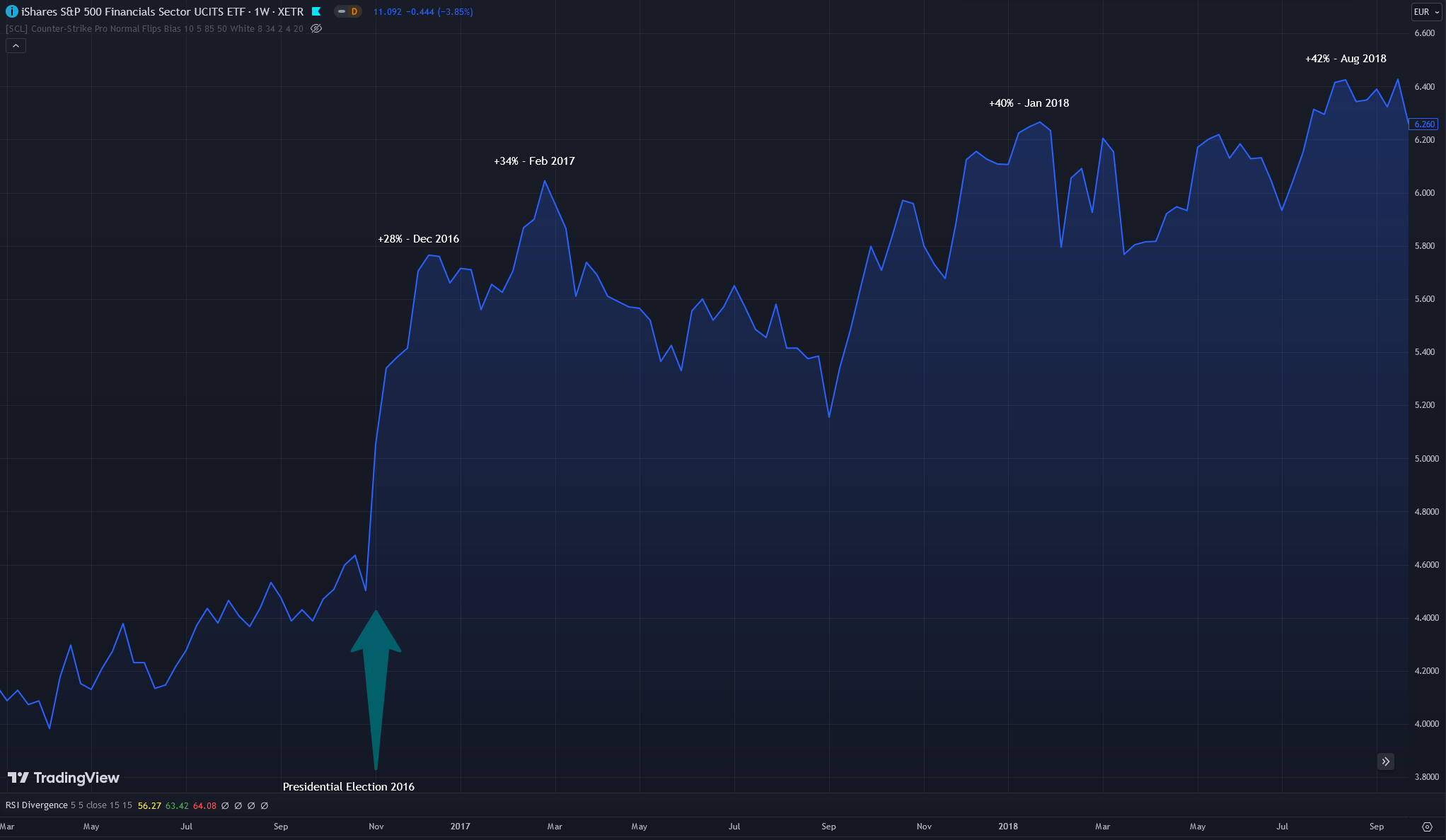
In the weeks following the election, certain sectors anticipated to benefit from Trump’s policies saw substantial gains. Financials, industrials, and energy stocks, in particular, experienced a notable surge. This was driven by expectations of deregulation, tax cuts, and increased infrastructure spending. The “Trump bump” reflected investor optimism about the new administration’s economic agenda.
SP500 Financials Sector ETF from 2016-2018
As can be seen from the example of the SP500 Financials Sector ETF, the fund recorded a massive rise immediately after the election. A plus of almost 30% was achieved within just a few weeks. The trend continued during Trump’s presidency, albeit with less intensity. Once again a sign of how strongly the markets are driven by hopes and expectations and how these are reflected in prices.
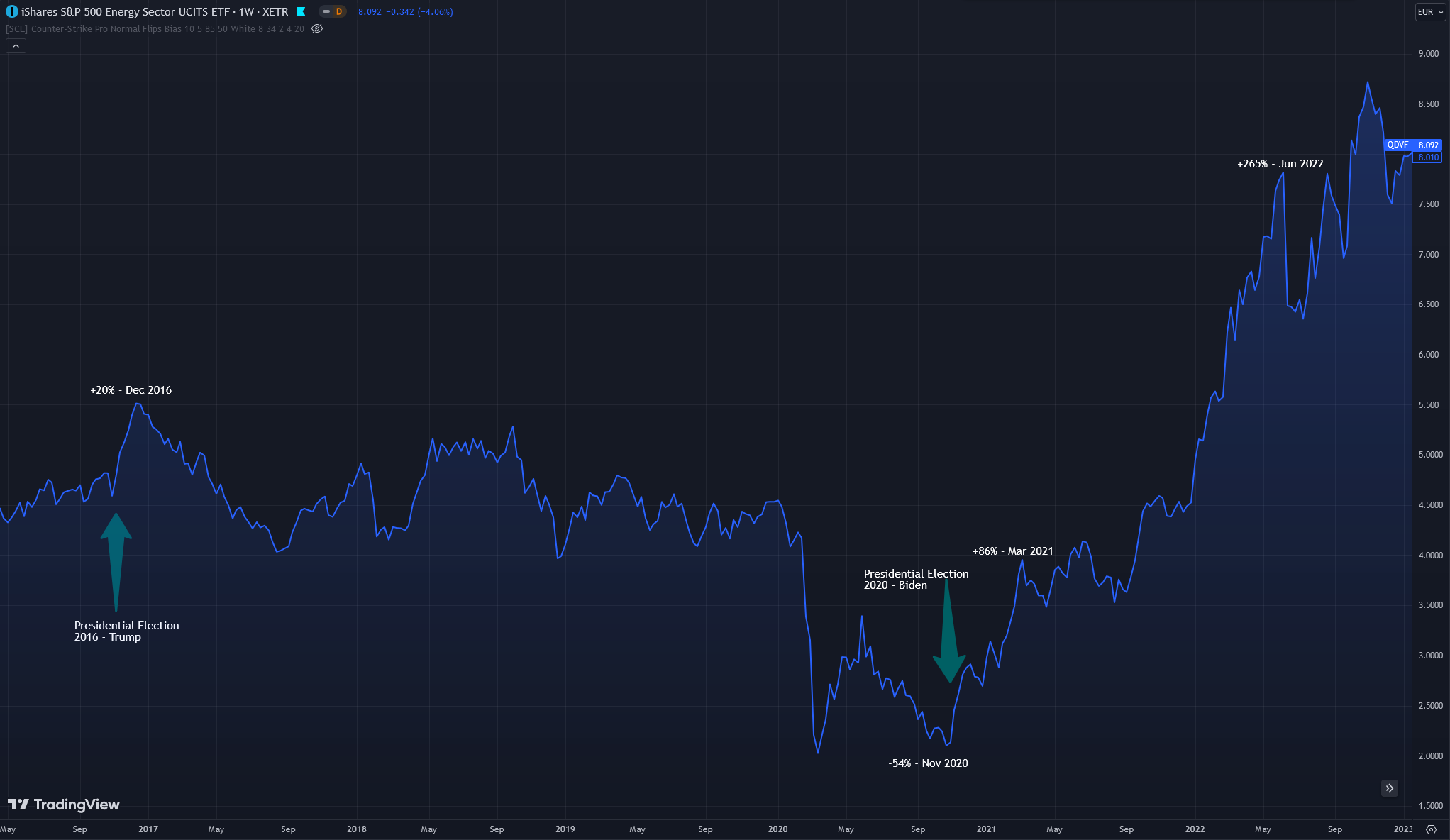
An even clearer example of the short-term euphoria is the SP500 Energy Sector ETF at the time of the election and the months thereafter. Here you can also see the sharp rise and the interest of investors in stocks in the energy sector, but also the rapid disillusionment and the associated fall in prices. However, many of the sharp rises on the stock market were only short-lived and, although some of them continued in the years to come, they did not ensure steady gains in the long term. With regard to the energy sector, a drop of 54% was recorded over the four years of the presidency, whereas shortly after the election, the market initially rose by 20% within around a month.
In comparison, the election of Joe Biden not only led to a much stronger hype in this sector, it was also more persistent and achieved an impressive 265% increase within two years. However, attributing this solely to the two presidents shortens the view, as both the coronavirus pandemic and Russia’s attack on Ukraine occurred in those years. Two events with a massive impact on the global markets.
Nevertheless, it can be seen that the presidential election often has a short-term impact on the financial markets and, depending on expectations, causes prices to rise or sectors to slide. In the medium to long term, it is necessary to observe whether these expectations are also fulfilled by laws and plans in order to react accordingly as an investor. As we have seen from the examples, short-term bets can pay off within a short time with above-average returns.
SP500 Energy Sector ETF 2016-2022
In summary, it can be said that a close study of the candidates’ statements and election programs can be worthwhile, bearing in mind that the expected investment horizon is short. However, these must be continuously reviewed to ensure that they remain valid and, in the event of changes, decisions for your own investments decisions must be derived from them. In the next section we will dive a little deeper into the different policies and efforts of the first Trump administration.
Tax Cuts and Jobs Act
One of Trump’s most significant legislative achievements was the Tax Cuts and Jobs Act (TCJA) of 2017. This reform lowered the corporate tax rate from 35% to 21%, providing a substantial boost to corporate profits. Companies responded with stock buybacks, increased dividends, and capital investments, which collectively bolstered stock prices.
State and Local Tax Rate by State
Source: WalletHub – 2024 State and local tax burdens
Investment Insight: Companies with high effective tax rates, such as regional banks and domestic manufacturers, were among the primary beneficiaries. Investors focusing on these sectors could capture the gains resulting from improved after-tax earnings.
Deregulation Efforts
Trump’s administration prioritized deregulation, particularly in the financial and energy sectors. The rollback of Dodd-Frank regulations aimed to reduce compliance costs for banks and encourage lending. In the energy sector, deregulation efforts supported increased oil and gas production by easing environmental restrictions.
Financial Sector
Investment Insight: Banks and financial institutions benefited from reduced regulatory burdens, making them attractive investment targets. Large financial institutions like JPMorgan Chase and smaller regional banks experienced growth in profitability and lending activities.
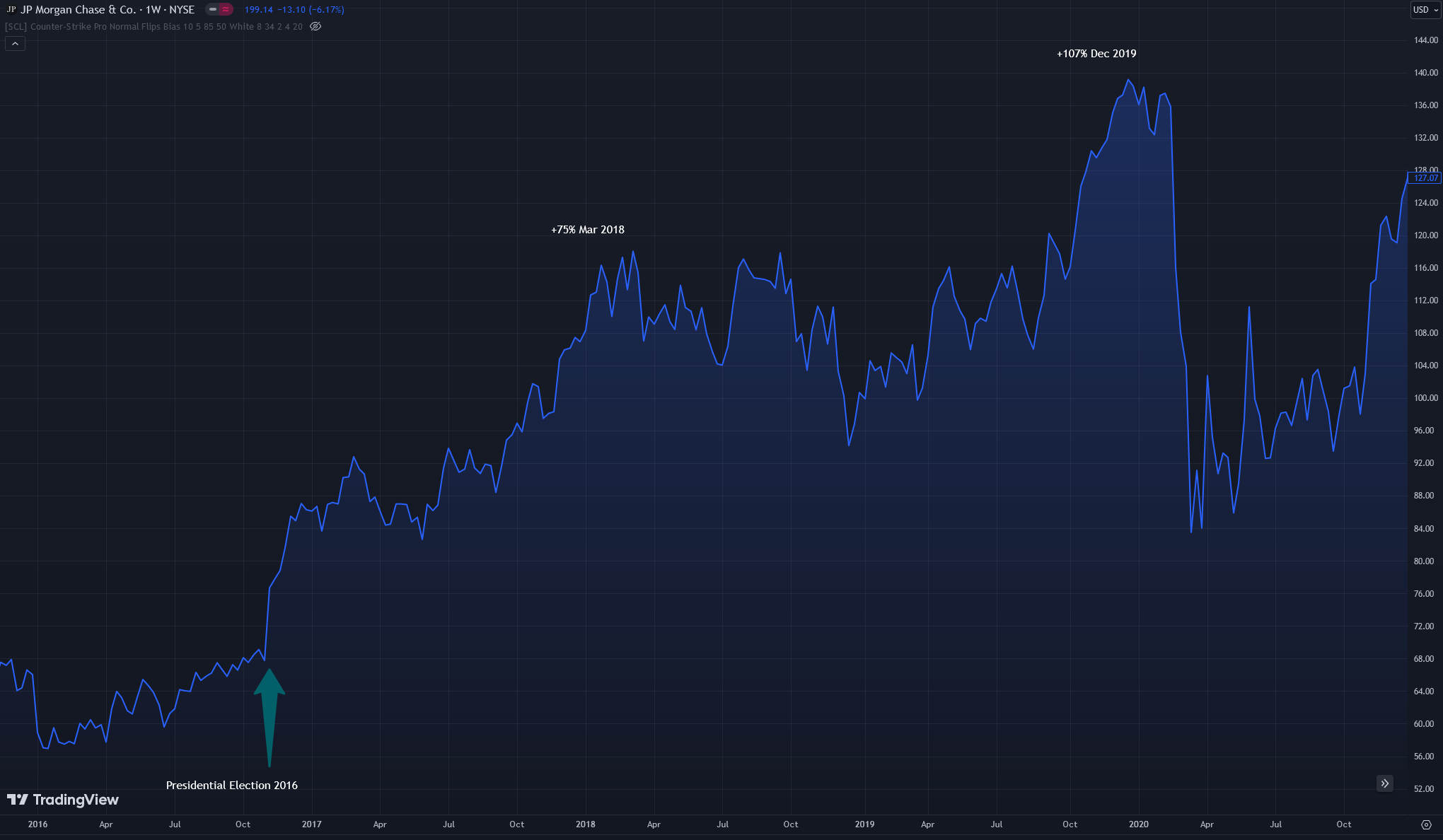
JP Morgan Chase Stock Price 2016-2021
As previously mentioned, the financial sector was able to record a strong increase in stock prices during the first months of the presidency and continued to rise thereafter. The stock price of JP Morgan Chase doubled over the course of Donald Trump’s tenure, excluding the effect of the Corona pandemic at the beginning of 2020, as these are considered Black Swan events, extraordinary effects.
During Joe Biden’s presidency, JPM experienced a similar price development (over 100% price increase), although in this case, the massive recovery effects from the Corona crash are included.
Energy Sector
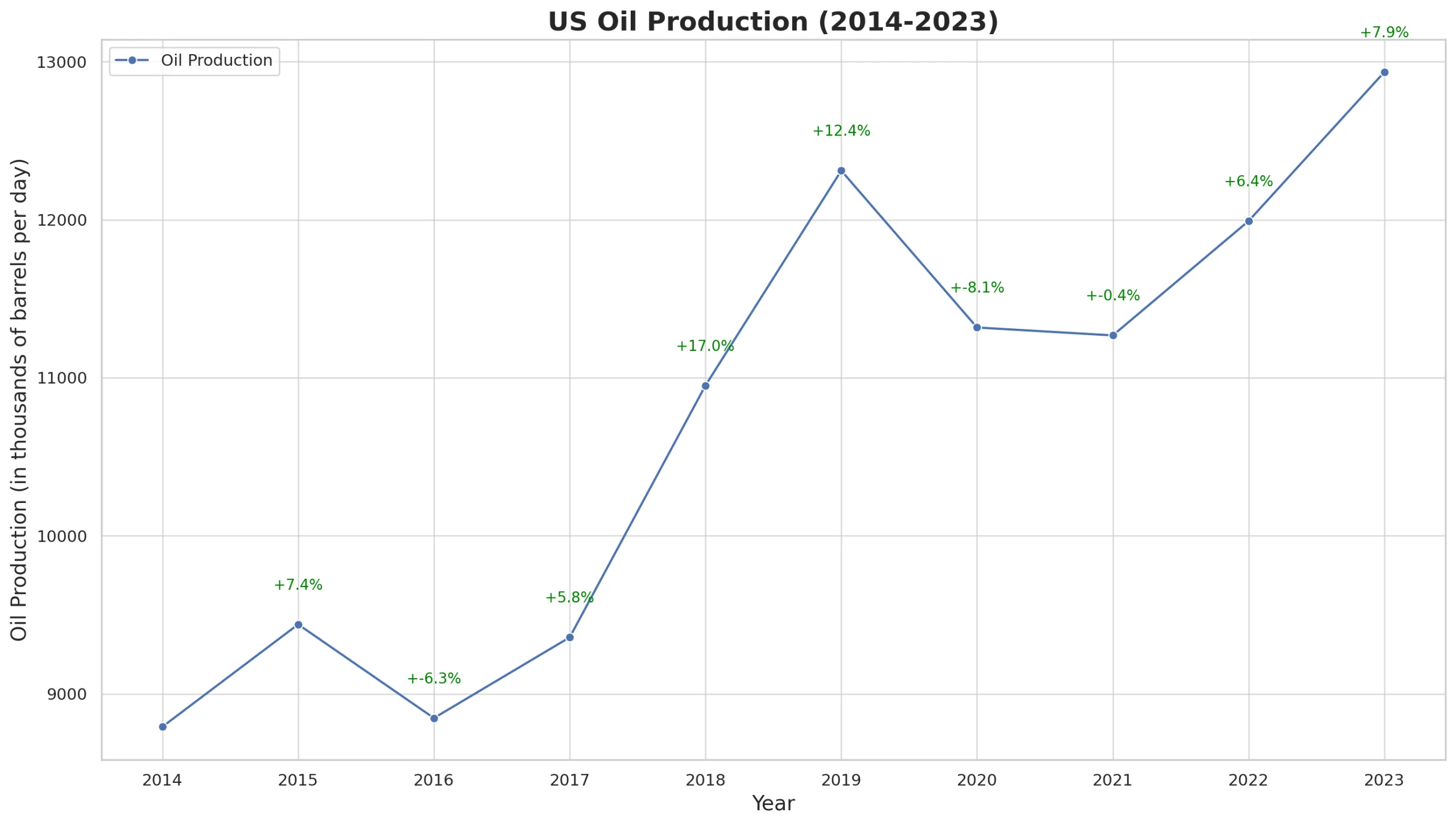
Trump’s administration rolled back numerous environmental regulations to boost domestic oil, natural gas, and coal production. Key actions included withdrawing from the Paris Agreement, opening up federal lands and offshore areas for drilling, and reducing restrictions on greenhouse gas emissions.
These policies led to increased fossil fuel production and energy exports, contributing to the U.S. achieving energy independence. However, the emphasis on fossil fuels and the rollback of environmental protections drew criticism from environmentalists and climate advocates. Critics argued that these policies undermined efforts to combat climate change and led to environmental degradation. Despite these controversies, Trump’s energy policies reshaped the sector, favoring traditional energy industries while slowing the momentum for renewable energy development.
Investment Insight: Oil and gas companies, particularly those involved in shale production, saw increased opportunities for expansion. Major players like ExxonMobil and Chevron capitalized on favorable regulatory changes.
Trade Policies and Tariffs
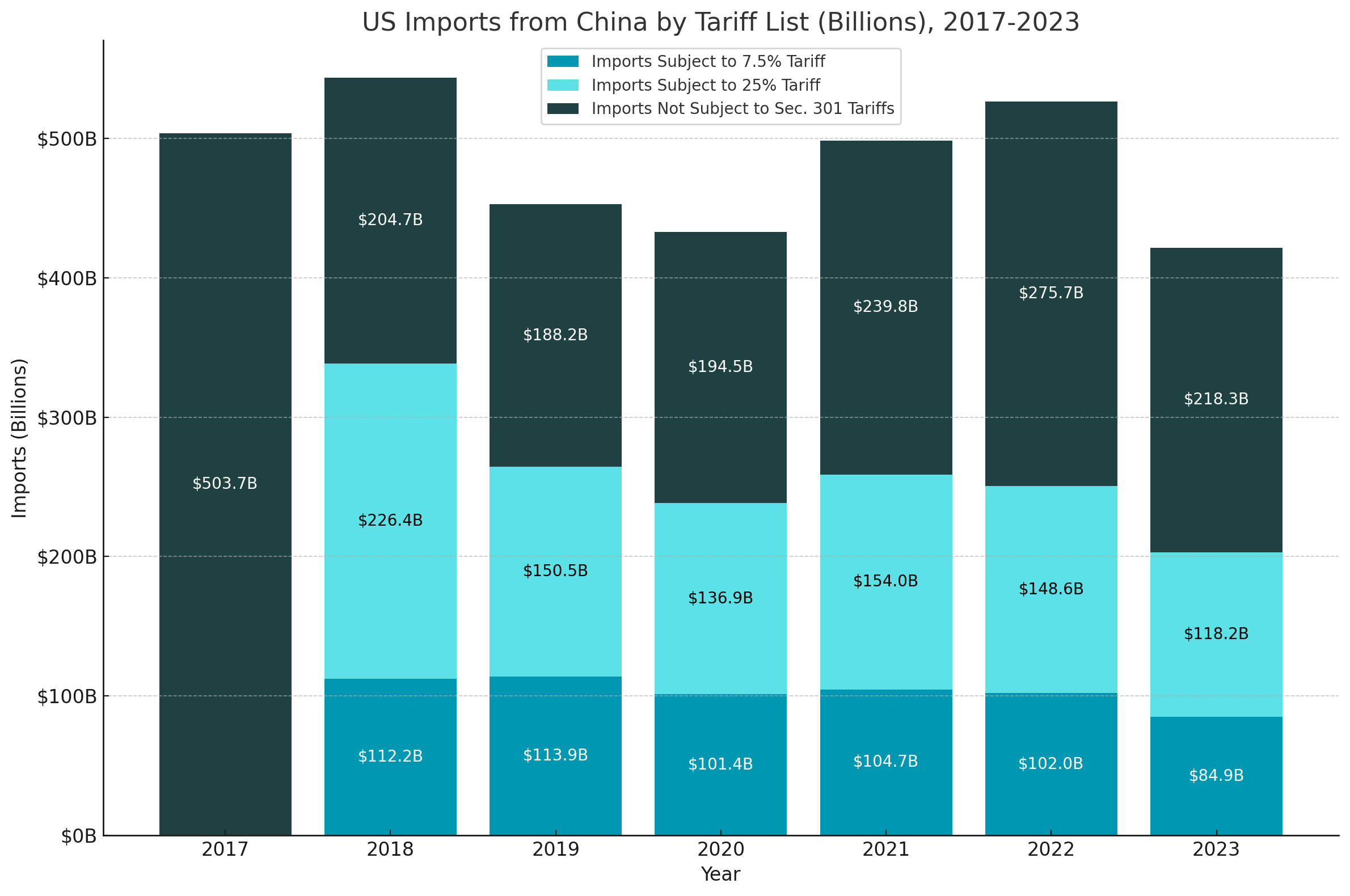
Trump’s trade policies, characterized by tariffs and trade wars, aimed to protect domestic industries but also led to market volatility. Tariffs on Chinese goods, steel, and aluminum impacted global trade dynamics, causing disruptions in supply chains and increased costs for manufacturers.
Manufacturing and Agriculture
Investment Insight: While tariffs benefited some domestic manufacturers by reducing foreign competition, they hurt others dependent on imported materials. Agricultural sectors faced retaliatory tariffs, affecting export markets.
Looking Forward: Trump’s Plans for a Potential Second Term
As Trump gears up for a potential second term, his economic and financial strategies are under intense scrutiny. Understanding these proposed policies can provide investors with valuable insights into potential market shifts.
Economic Policies
Further Tax Cuts
Overview: Trump has suggested further tax cuts, particularly for the middle class and businesses, to stimulate economic growth. The proposed cuts aim to boost disposable income, consumer spending, and corporate investment. Lowering the corporate tax rate to 15% would boost economic growth but reduce federal tax revenue, complicating other pro-growth reforms. The 2017 Tax and Jobs Act cut the corporate rate from 35% to 21%, enhancing U.S. competitiveness by shifting to a territorial tax system. Currently, the combined U.S. rate is 25.8%, just below the OECD average. Reducing the rate to 15% would make the U.S. more attractive for investment, potentially increasing GDP by 0.4%, wages by 0.4%, and adding 93,000 jobs. However, corporate taxes, being highly distortionary, deter investment and long-term wage growth.
Continued Deregulation
Financial Sector: Trump has indicated plans to continue deregulating industries, particularly energy and finance. Further deregulation could involve relaxing rules on banking operations, capital requirements, and reporting standards.
Investment Insight: Energy and financial stocks could benefit from reduced regulatory burdens, presenting investment opportunities. Banks and financial institutions, along with oil and gas companies, would likely see increased profitability. Investors should focus on institutions that are well-positioned to capitalize on deregulation, such as large multinational banks and innovative energy companies expanding in new areas like shale gas.
Trade Policies
Tough Stance on Trade: Trump has signaled a continuation of his tough stance on trade, particularly with China. This could involve new tariffs, renegotiation of trade agreements, and stricter enforcement of trade rules.
Candidate Trump proposes a new 10 percent universal tariff on all imports and a 60 percent tariff on imports from China, with potential higher tariffs on Chinese EVs or all EVs. In 2023, total goods imports were $3.1 trillion, with $421.4 billion from China. Without considering behavioral changes, the universal tariff would raise $311 billion in taxes, while the 60 percent tariff on Chinese goods would raise $213 billion. However, actual revenue would be lower due to avoidance, reduced imports, and lower incomes affecting payroll and income tax revenues. The proposed tariffs are estimated to reduce long-run GDP by 0.8 percent, the capital stock by 0.7 percent, and cut 684,000 full-time equivalent jobs. Tariffs are not expected to impact pre-tax wages because the reduction in the capital stock matches the reduction in hours worked, keeping the capital-to-labor ratio and wage levels unchanged.
Investment Insight: Trade policies could create volatility, but domestic industries protected by tariffs might benefit. Investors should focus on sectors like manufacturing, technology, and agriculture that could be impacted by supply chain disruptions and trade tariffs. Companies with strong domestic supply chains and less dependence on international trade may be more resilient. Companies with a strong exposure to China or a supply chain reliant on China could be negatively effected by proposed policies.
Industry-Specific Impacts
Oil Industry
Trump’s first term saw significant support for the fossil fuel industry, and this is expected to continue. His policies favor increased drilling, reduced environmental regulations, and expanded oil production. In a potential second term, Trump might push for further exploration of federal lands and offshore drilling, aiming to make the U.S. a dominant global energy player.
Investment Insight
Oil Stocks: Investors could benefit by focusing on oil stocks, especially those involved in shale production. Companies like ExxonMobil, Chevron, and smaller shale producers are well-positioned to take advantage of these favorable conditions. Increased oil production could lead to lower global oil prices, benefiting industries reliant on fuel but potentially challenging for oil producers if prices fall too low.
Cryptocurrency Market
Trump’s stance on cryptocurrency has been mixed, with past criticisms of Bitcoin and other digital currencies. However, regulatory clarity and potential support for blockchain technology could emerge. At a recent bitcoin conference in Nashville, Donald Trump reversed his previous stance on cryptocurrency, which he once labeled a “scam” and a threat to the US dollar.
“My job will be to set you free,” said Trump.
Now, Trump promises to make America a global bitcoin leader if re-elected, aiming to attract support from the crypto community. His shift in position comes as he receives substantial funding from cryptocurrency enthusiasts who are eager for a more favorable regulatory environment. This new pro-crypto stance marks a significant change from his earlier criticisms and underscores his strategic move to court the industry’s support.
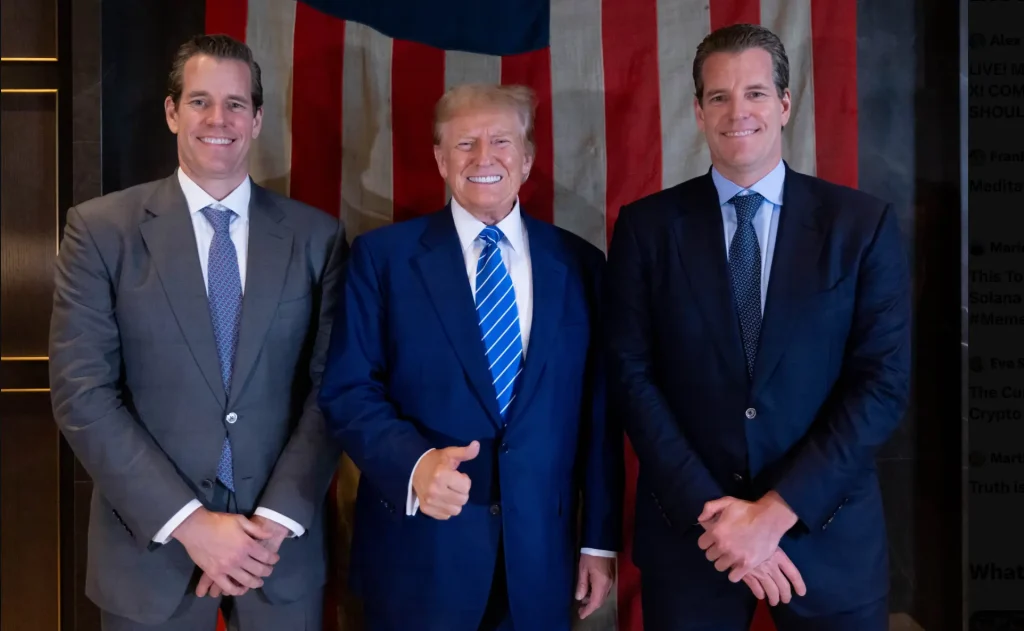
Donald Trump and the Winkelvoss Twins – popular advocates for the crypto community and founder of the crypto exchange Gemini
Investment Insights:
Cryptocurrency Investments: Regulatory clarity could lead to increased institutional investment in cryptocurrencies like Bitcoin and Ethereum. Investors should watch for policy announcements that could impact market dynamics. Clearer regulations could reduce volatility and attract more conservative investors.
Blockchain Technology: Support for blockchain could benefit companies involved in developing and utilizing this technology, presenting new investment opportunities. Firms in sectors such as finance, supply chain management, and healthcare that leverage blockchain could see significant growth.
Potential DFS and Capital One Merger
As an example of further deregulation and similar developments, the cases of Capital One and DFS serve as illustrations. Speculation about mergers, such as between Discover Financial Services (DFS) and Capital One, could also play a significant role in market movements. A merger could lead to the creation of a financial powerhouse with expanded market reach and enhanced service offerings. Capital One expects to close the deal by late 2024 or early 2025, subject to regulatory and shareholder approvals. The Trump administration, with its business-friendly policies, could be significantly more open to a merger than a government led by the Democrats. The regulatory hurdles are likely to be considerably lower.
Capital One DFS Logos
Should this merger be possible under Trump, it could create a lighthouse effect for the markets, leading to further large-scale acquisitions and resulting in higher market concentration.
Investment Insights:
Banking Sector: A merger could lead to significant shifts in the banking landscape, creating opportunities for investors. Enhanced market share and synergies from the merger could drive stock performance. Investors should watch for regulatory approvals and competitive responses from other financial institutions.
Regulatory Environment: Investors should monitor regulatory approvals and the competitive implications of such mergers. The success of the merger would depend on integration efficiencies and the ability to capitalize on expanded customer bases and service capabilities.
Long-Term Market Implications
Investor Sentiment and Business Confidence
Trump’s pro-business stance generally boosted investor confidence and market sentiment. This confidence-driven bull market created broad investment opportunities across various sectors.
Investment Insight: Confidence-driven markets often present buying opportunities, especially in growth-oriented sectors. Sectors such as technology, consumer discretionary, and healthcare could see increased investment due to optimistic business outlooks and consumer confidence.
Economic Growth and Market Performance
The economy experienced notable growth during Trump’s tenure, albeit with increased volatility. The combination of tax cuts, deregulation, and increased government spending contributed to economic expansion.
Investment Insight: Diversifying investments to include both growth and defensive stocks can hedge against volatility while capturing upside potential. Sectors such as technology, healthcare, and consumer goods offer balanced growth opportunities.
Potential Impact on Monetary Policy and the Federal Reserve
Trump has frequently expressed dissatisfaction with the Federal Reserve’s policies, advocating for lower interest rates and criticizing its autonomy. His potential second term could see more pressure on the Fed to adopt policies that support economic growth through lower interest rates and potentially more aggressive quantitative easing.
Investment Insight
Interest Rates: Lower interest rates typically boost borrowing and spending, which can drive economic growth and stock market performance. Sectors such as real estate, consumer discretionary, and technology could benefit from a low-rate environment. Lower rates could also lead to higher stock valuations due to lower discount rates on future earnings.
Federal Reserve Independence: Any perceived undermining of the Fed’s independence could lead to market uncertainty. Investors should monitor these developments closely, as they could impact market stability and investor confidence. Potential conflicts between the Fed and the administration could lead to volatility in bond and currency markets.
Lessons Learned and Future Outlook
Key Takeaways for Investors
Deregulation and Tax Cuts: Focus on sectors and companies that stand to benefit from reduced regulatory burdens and lower corporate taxes.
Trade Policies: Monitor trade policies and tariffs, especially those affecting key sectors like technology, agriculture, and manufacturing.
Geopolitical Risks: Consider the potential impact of geopolitical risks and international trade relations on global markets and specific industries.
Diversification: While focusing on sectors likely to benefit from Trump’s policies, maintain a diversified portfolio to manage risks associated with policy changes and market volatility.
Here are some key areas that could potentially benefit from a Trump re-election:
Energy Sector
Oil and Gas: Trump’s previous administration emphasized energy independence and supported the traditional energy sector, including oil and gas exploration and production. Investors might look at companies involved in drilling, pipeline construction, and fossil fuel extraction. For example, ExxonMobil (XOM), Chevron (CVX) or Halliburton (HAL) that are all leading oil & gas companies or providing services and product for the industry.
Deregulation: Policies favoring deregulation in the energy sector could lead to reduced operational costs for energy companies, potentially boosting their profitability.
Financial Sector
Banks and Financial Services: Trump’s administration was known for reducing regulatory burdens on banks and financial institutions. A re-election could mean a continuation of these deregulatory policies, potentially benefiting large banks, investment firms, and other financial service providers. Companies that could benefit are: JPMorgan Chase (JPM), Goldman Sachs (GS) or Bank of America (BAC) just to name a few example for leading banks.
Industrial Sector
Manufacturing and Heavy Industry: Policies promoting domestic manufacturing and infrastructure development could benefit companies in construction, engineering, and heavy machinery. Trump’s focus on “America First” might lead to increased government contracts and investment in infrastructure projects. Caterpillar (CAT), General Electric (GE) or United Rentals (URI), are companies in the heavy manichery, manufacturing and supplies equipment sector.
Defense and Aerospace
Defense Contractors: Trump’s administration increased defense spending, benefiting companies in the defense and aerospace sectors. Firms that produce military equipment, technology, and services might see continued growth with sustained or increased defense budgets, like Raytheon (RTX), Northrop Grunman (NOC) or Lockheed Martin (LMT) to name at least three here. None of these mentions are exhaustive and many other companies in the sectors could benefit from deregulations, taxcuts or increased spending.
Looking Ahead: Post-Trump Market Dynamics
Markets are inherently dynamic, responding to a plethora of factors including economic policies, geopolitical events, technological advancements, and changes in consumer behavior. When a new administration takes office, it often brings shifts in economic policies that can significantly influence market behavior and investor sentiment.
Transition from Trump to Biden Administration
The transition from the Trump administration to the Biden administration marked a significant shift in economic priorities and policy focus. Here are some key differences:
Infrastructure: The administration’s push for massive infrastructure spending aims to modernize transportation, communication, and energy systems. This has created opportunities for companies involved in construction, engineering, and materials.
Economic Priorities:
Trump Administration: Focused on deregulation, tax cuts, and traditional energy sectors like oil and gas. The administration’s policies aimed at stimulating business investment through lower corporate taxes and reduced regulatory burdens.
Biden Administration: Prioritizes renewable energy, healthcare, and infrastructure. The focus has shifted towards sustainable growth, climate change mitigation, and enhancing social welfare systems.
Policy Changes and Market Impact:
Renewable Energy: The Biden administration has placed a strong emphasis on combating climate change and promoting renewable energy sources such as wind, solar, and electric vehicles (EVs). This policy shift has boosted investments in green technologies and companies focusing on sustainability.
Healthcare: With a focus on expanding healthcare access and affordability, the administration’s policies have impacted healthcare providers, pharmaceutical companies, and biotechnology firms. This includes efforts to lower prescription drug prices and expand the Affordable Care Act (ACA).
In summary, post-Trump market dynamics are characterized by a shift in economic priorities towards renewable energy, healthcare, and infrastructure under the Biden administration. Investors can navigate these changes by staying informed about policy developments, adjusting their portfolios to align with current priorities, and maintaining a diversified investment strategy to manage risks effectively.
Investment Insight: Staying adaptable and focusing on sectors aligned with the current administration’s priorities is crucial. Investors should monitor policy changes and adjust their portfolios accordingly. For instance, the Biden administration’s focus on renewable energy presents opportunities in green technologies and sustainability-focused investments.
Conclusion
The potential re-election of Donald Trump carries significant implications for U.S. financial markets. His proposed policies for a second term—focused on further tax cuts, continued deregulation, a tough stance on trade, and support for key industries like oil and finance—present various opportunities and challenges for investors. By understanding these dynamics and staying adaptable to future political changes, investors can optimize their portfolios and navigate market shifts effectively. As we move forward, continued vigilance and strategic investment decisions will be key to leveraging political developments for financial gain.
Disclaimer
This article aims to provide an in-depth analysis of the financial market impacts of Donald Trump’s potential second term and subsequent policies. It focuses solely on the potential impacts of a second term for Donald Trump from a financial perspective, and is not a political or economic assessment. It is intended to offer a neutral view on the changes and does not favor any political side, nor does it reflect any of the authors political opinions in favor of any of the candidates or their political opinion. The insights presented are based on historical data, market analysis, and Trump’s proposed policies, and readers are encouraged to consider multiple perspectives and conduct their own research before making investment decisions.
Seasoned data scientist with a deep passion for financial markets, stocks, and investing. With years of experience in analyzing complex data, I thrive on uncovering insights that inform smart investment decisions.
Your blog is a breath of fresh air in the often stagnant world of online content. Your thoughtful analysis and insightful commentary never fail to leave a lasting impression. Thank you for sharing your wisdom with us.
Thank you for the auspicious writeup It in fact was a amusement account it Look advanced to more added agreeable from you By the way how could we communicate
To provide you with an optimal experience, we use technologies such as cookies to store and/or access device information. If you consent to these technologies, we may process data such as browsing behavior or unique IDs on this website. If you do not give or withdraw your consent, certain features and functions may be impaired.
Functional
Always active
The technical storage or access is strictly necessary for the legitimate purpose of enabling the use of a specific service expressly requested by the subscriber or user, or for the sole purpose of carrying out the transmission of a communication over an electronic communications network.
Vorlieben
Die technische Speicherung oder der Zugriff ist für den rechtmäßigen Zweck der Speicherung von Präferenzen erforderlich, die nicht vom Abonnenten oder Benutzer angefordert wurden.
Statistics
Die technische Speicherung oder der Zugriff, der ausschließlich zu statistischen Zwecken erfolgt.Technical storage or access used solely for anonymous statistical purposes. Without a subpoena, the voluntary consent of your Internet service provider or additional records from third parties, the information stored or accessed for this purpose alone cannot generally be used to identify you.
Marketing
The technical storage or access is necessary to create user profiles, to send advertising or to track the user on a website or across several websites for similar marketing purposes.












Your blog is a breath of fresh air in the often stagnant world of online content. Your thoughtful analysis and insightful commentary never fail to leave a lasting impression. Thank you for sharing your wisdom with us.
Thank you for the auspicious writeup It in fact was a amusement account it Look advanced to more added agreeable from you By the way how could we communicate