


In an impressive display of economic resilience, Spain’s economic growth in 2024 has reached an extraordinary 3.2%, positioning it as the fastest-growing economy in the eurozone. This remarkable Spain economic growth rate not only exceeded official forecasts but significantly outpaced other major European economies during the same period.
The Drivers Behind Spain’s Economic Success
Tourism: The Backbone of Spain’s Economic Recovery
Tourism remains the cornerstone of Spain’s economic growth in 2024. The sector experienced a robust resurgence, with revenues approaching €90 billion. This revival isn’t merely a return to pre-pandemic levels but represents an evolution of Spain’s tourism model.
International arrivals reached record numbers, with particularly strong growth from North American, Asian, and Middle Eastern markets. Beyond traditional sun-and-beach tourism, Spain has successfully diversified its offerings:




- Cultural Tourism: Historic cities like Seville, Granada, and Toledo have seen increased visitor numbers, driven by heritage-focused marketing campaigns.
- Gastronomic Tourism: Spanish cuisine continues to gain international recognition, with food tours and culinary experiences becoming major attractions.
- Eco-Tourism: Sustainable travel initiatives in regions like the Canary Islands and Asturias are attracting environmentally conscious travelers.
- Digital Nomad Hubs: Cities such as Barcelona, Valencia, and Málaga have emerged as premier destinations for remote workers, thanks to new visa policies designed specifically for this growing demographic.
The tourism sector’s multiplier effect has stimulated related industries including retail, transportation, and entertainment. Spanish airports handled over 275 million passengers in 2024, a 15% increase from the previous year, further demonstrating the sector’s contribution to Spain economic growth.
Industrial Resurgence: Manufacturing’s Comeback
Spain’s industrial sector has undergone a significant revival, contributing substantially to Spain’s economic growth rate. High-tech manufacturing, particularly in the automotive industry, has seen a remarkable resurgence. In 2024, Spanish automobile production exceeded 2.8 million units, representing a 12% increase year-over-year.
This industrial renaissance has been driven by:
- Government Incentives: Tax breaks and subsidies for companies investing in advanced manufacturing technologies.
- Sustainability Initiatives: Investment in electric vehicle production and green manufacturing processes.
- Innovation Clusters: The development of industrial parks focused on specific sectors, fostering collaboration between businesses, universities, and research institutions.
- Supply Chain Reconfiguration: Spain has benefited from nearshoring trends as European companies seek to reduce dependence on distant suppliers.
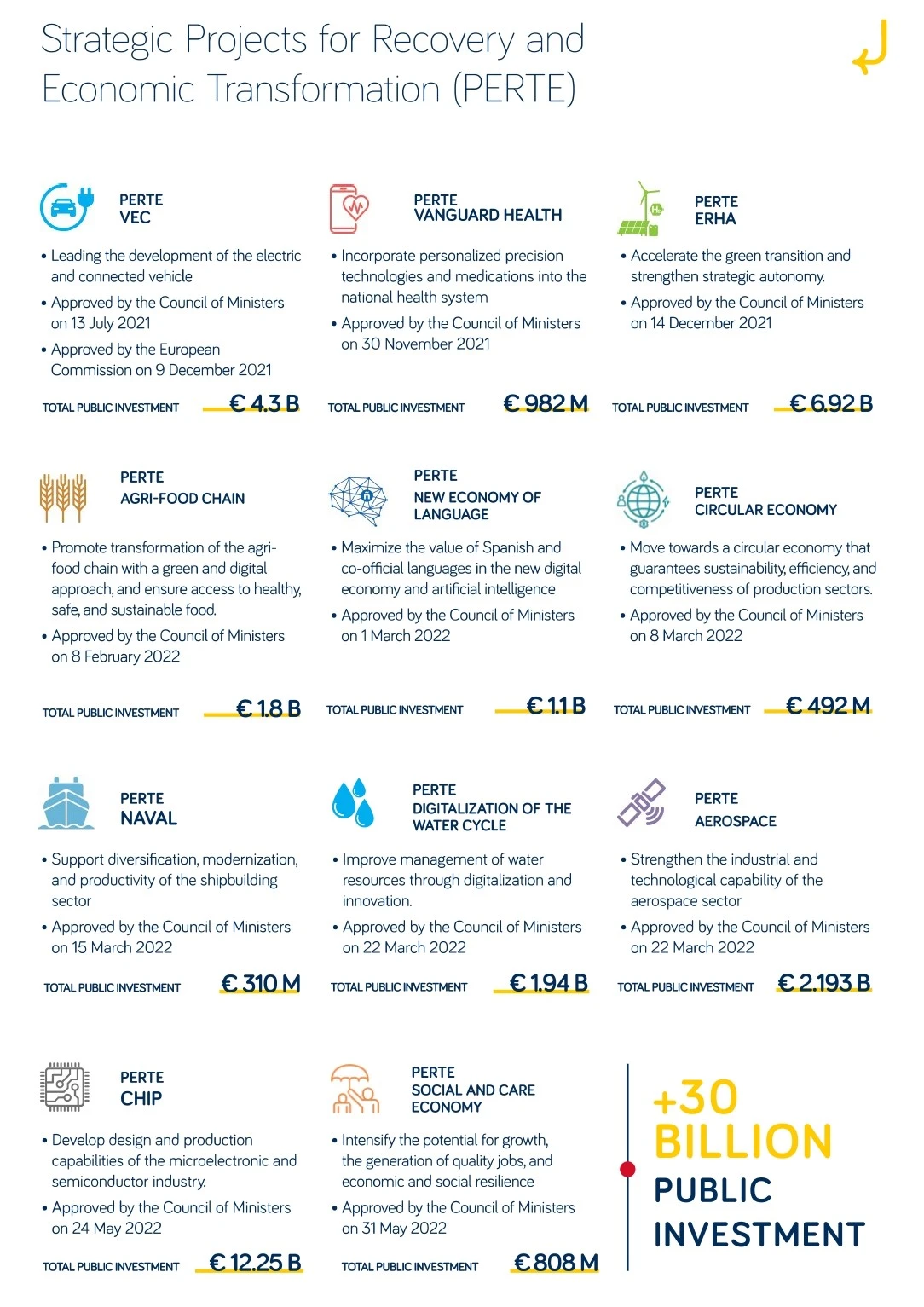
The PERTE (Strategic Projects for Economic Recovery and Transformation) initiative has channeled over €11 billion into industrial modernization projects, creating a framework for sustainable economic growth in Spain through advanced manufacturing, with a total volume of €30 billion.
Digital Transformation: Spain’s Tech Revolution
The Spanish government has invested heavily in digitalization, with the “Spain Digital 2025” plan allocating €20 billion to technological innovation. This commitment to digital transformation has:
- Created over 300,000 jobs in tech-related fields
- Established 120+ innovation hubs across the country
- Supported more than 5,000 startups through funding and mentorship programs
- Accelerated the adoption of AI in traditional industries
Madrid has emerged as one of Europe’s fastest-growing tech hubs, attracting talent and investment from across the globe. The city now hosts over 1,200 startups, a 25% increase from 2023. Barcelona continues to solidify its reputation as a mobile and smart city technology center, hosting the world-renowned Mobile World Congress.
This digital revolution has been crucial to Spain’s economic growth 2024 performance, diversifying the economy beyond traditional sectors and increasing productivity across industries.
Labor Market Transformation
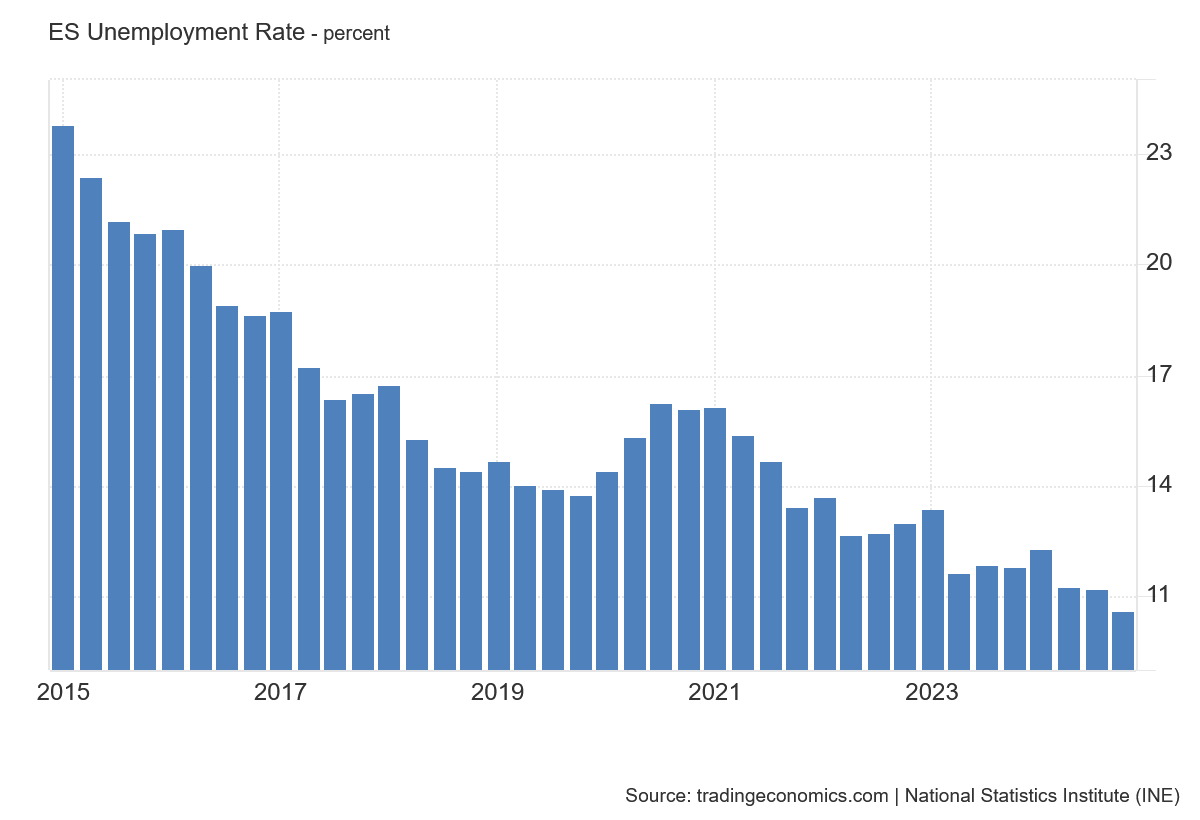
The labor market has mirrored the positive trajectory of Spain’s economic growth. By the end of 2024, Spain’s unemployment rate had fallen to 10.6%, the lowest since 2007, with 21.9 million people employed—a historic high.
This improvement can be attributed to several factors:
Immigration and Workforce Rejuvenation
Spain’s pro-immigration policies have infused the labor market with fresh talent and dynamism. Nearly 90% of new jobs were filled by immigrants from countries such as Colombia, Venezuela, and Morocco. This demographic shift has:
- Rejuvenated an aging workforce
- Stimulated domestic demand through increased consumption
- Filled critical skills gaps, particularly in healthcare, technology, and agriculture
- Enhanced Spain’s cultural diversity and global connectivity
The government has streamlined work visa processes for skilled professionals, attracting talent from around the world and contributing to Spain economic growth 2024 through human capital development.
Vocational Training and Skills Development
Spain has introduced comprehensive vocational training programs aimed at reducing youth unemployment. By fostering technical education in high-demand sectors such as IT, AI, and green energy, Spain is preparing its workforce for the evolving global job market.
These initiatives include:
- Dual training programs combining classroom learning with workplace experience
- Public-private partnerships with major employers to design relevant curricula
- Digital skills bootcamps offering rapid reskilling opportunities
- Apprenticeship schemes with guaranteed employment for top performers
These programs have reduced youth unemployment by 8.2 percentage points in 2024 alone, contributing significantly to overall economic growth in Spain.
Remote Work Revolution
The normalization of remote work has transformed Spain’s labor market dynamics. New legislation has established clear frameworks for teleworking, enabling businesses to expand their reach while allowing skilled professionals to contribute from across the country.
This shift has:
- Reduced regional economic disparities
- Decreased urban congestion in major cities
- Revitalized rural communities through digital nomad influxes
- Improved work-life balance and workforce satisfaction
Cities like Valencia and Málaga have developed specific strategies to attract remote workers, creating dedicated spaces and services that cater to this growing demographic.
Pillars of Spain’s Economic Strength
Renewable Energy: Leading Europe’s Green Transition
Spain has positioned itself as a leader in renewable energy within Europe, significantly contributing to Spain’s economic growth in 2024. The country now generates over 42% of its electricity from renewable sources, with ambitious plans to reach 74% by 2030.
Investments in wind and solar power have not only reduced energy costs but also attracted substantial foreign direct investment:
- Solar capacity increased by 22% in 2024 alone
- Wind energy projects received €8.5 billion in new investments
- Green hydrogen initiatives have secured €6.9 billion in public-private funding
- Battery storage technologies have attracted €4.2 billion in venture capital
Spain now boasts some of the largest solar and wind farms in Europe, with the 500MW Núñez de Balboa solar plant and the 1,000MW Gulf of Cádiz offshore wind farm standing as testaments to the country’s commitment to renewable energy.
This sector has created over 180,000 direct jobs and contributed €14.5 billion to Spain economic growth in 2024, establishing the country as a potential energy exporter to northern European markets in the coming decades.
Textile Industry: Fast Fashion and Beyond
The textile and apparel industry, led by global giants like Inditex (parent company of Zara), continues to be a significant contributor to Spain’s export economy and overall economic growth in Spain. The sector’s agility in adapting to fast fashion trends and efficient supply chain management has solidified its global competitiveness.
Key developments in this sector include:
- Implementation of blockchain technology for supply chain transparency
- Investments in sustainable materials and circular economy initiatives
- Expansion of omnichannel retail strategies
- Development of AI-driven trend forecasting systems
Inditex reported a 12% increase in global sales in 2024, with e-commerce growing by 24%. The company’s continued innovation in retail technologies and sustainability practices has maintained Spain’s position as a global leader in fashion retail.
Agriculture and Food Production: A Hidden Champion
While often overshadowed by tourism and manufacturing, Spain’s agricultural sector has been a reliable contributor to Spain economic growth 2024. As the largest producer of olive oil and the third-largest exporter of fruits and vegetables globally, Spanish agriculture generated €56.7 billion in 2024.
The sector has embraced technological innovation:
- Precision agriculture techniques have increased yields by 15-20%
- Smart irrigation systems have reduced water consumption by 30%
- Vertical farming ventures have secured €230 million in investment
- Organic farming has expanded to cover 11% of agricultural land
Spanish food exports reached a record €62.9 billion in 2024, with particular strength in olive oil, wine, fruit, and processed food products. The “Foods from Spain” campaign has enhanced the international reputation of Spanish agricultural products, supporting growth in high-value export markets.
Financial Market Performance and Investment Opportunities
The IBEX 35: Reflecting Spain’s Economic Vitality
Spain’s financial markets have mirrored its economic vitality. The IBEX 35, Spain’s benchmark stock index, has seen a notable uptrend, reflecting investor confidence in Spain’s economic growth. Major corporations such as Inditex, Banco Santander, and Iberdrola have been instrumental in this upward trajectory.
The IBEX 35 has climbed 28.2% over the last five years, outperforming many other European markets. This performance reflects both the strength of Spain’s largest companies and growing international investor interest in Spanish assets.
Market Capitalization to GDP: A Value Investor’s Perspective
The Market Capitalization to GDP ratio, often referred to as the “Buffett Indicator,” provides crucial insights into market valuation relative to economic output. Spain’s MCAP/GDP ratio currently stands at 63%, reflecting a fair valuation compared to historical trends.
- Historical Low: 25% during economic downturns.
- Historical High: 126% during peak market conditions.
This moderate ratio suggests that Spanish equities remain modestly undervalued despite recent gains, offering potential upside for long-term investors. When analyzed alongside Spain’s Shiller PE ratio of 17.31 (below the European average of 19.8), a compelling value proposition emerges. Both metrics signal that Spanish markets have not yet fully priced in the country’s robust economic growth in Spain.
Financial analysts point to several factors supporting this valuation gap:
- Historical risk premiums associated with Spanish assets haven’t fully adjusted to recent economic stability
- International investor allocation to Spanish equities remains below pre-2008 levels
- Market pricing hasn’t fully incorporated the structural improvements in Spain’s economic foundation
- The transition to high-value sectors hasn’t been fully reflected in overall market valuations
For investors with a medium to long-term horizon, this combination of strong Spain economic growth 2024 performance and reasonable market valuations presents an attractive opportunity as the country continues its economic renaissance.
Investment Opportunities in a Growing Economy
Several sectors present particularly strong investment opportunities as Spain economic growth 2024 continues:
Banking & Finance
Spanish banks have completed their restructuring following the financial crisis and now demonstrate robust balance sheets and growing profitability. Banco Santander and BBVA continue to expand internationally, offering stable returns and benefiting from Spain’s strong domestic consumption.
Digital banking initiatives have positioned Spanish financial institutions at the forefront of fintech innovation in Europe, with mobile banking adoption reaching 78% of customers.
Renewable Energy
Companies like Iberdrola and Acciona are at the forefront of Europe’s green transition, benefiting from government incentives and private sector investment. Spain’s renewable energy companies are increasingly expanding internationally, securing projects across Europe, Latin America, and Asia.
Technology & Infrastructure
Spain’s investment in digitalization presents opportunities in tech and smart infrastructure projects. Barcelona’s 22@ district has emerged as a technology hub, hosting over 8,500 companies employing more than 90,000 people. Madrid’s startup ecosystem has attracted €1.2 billion in venture capital in 2024 alone.
Healthcare & Biotechnology
Spain has become a hub for medical research, pharmaceutical production, and biotech startups. The sector has seen €4.9 billion in investment in 2024, with particular strength in oncology research, biopharmaceuticals, and medical devices.
The Road Ahead: Sustaining Spain’s Economic Growth
Despite its impressive performance, Spain faces challenges that must be addressed to maintain its economic growth rate:
- Productivity Enhancement: While employment has increased, productivity growth remains modest. Continued investment in automation, digitalization, and workforce development will be essential.
- Regional Disparities: Economic growth has been concentrated in major urban areas. Policies to distribute prosperity more evenly across regions are necessary for sustainable development.
- Public Debt Management: Spain’s public debt remains high at 106% of GDP. Prudent fiscal policies will be needed to ensure long-term economic stability.
- Climate Adaptation: As a Mediterranean country, Spain faces significant climate change risks. Investment in adaptation measures will be crucial for economic resilience.
However, Spain’s recent economic performance has redefined its role within Europe. By leveraging its sectoral strengths, embracing progressive policies, and addressing existing challenges, Spain is poised to sustain its growth trajectory.
With continued investments in innovation, sustainability, and human capital, Spain’s economic growth in 2024 is not merely a statistical peak but represents the foundation of a longer-term transformation. As investors and policymakers turn their attention to this revitalized nation, Spain stands as a testament to the potential of strategic economic transformation, setting the stage for sustained prosperity in the coming years.