

Is Novo Nordisk worth a buy? As a global leader in chronic disease management, Novo Nordisk (NVO) offers investors a compelling opportunity. The company has a unique focus on diabetes and obesity. Its business model, competitive advantages, management quality, financial strength, and potential risks offer valuable insights for investors.
Here’s a closer look at Novo Nordisk through the lens of long-term investing. In the following sections we will take a closer look at Novo Nordisk’s business model. We will look at the various aspects and try to arrive at a valuation of the company. In addition to the figures and market positioning, we will also look at the management and long-term focus. And last but not least, whether NVO is a value stock that can add value to a portfolio at the current discount. Let’s find out whether a purchase might be worthwhile or not?
Understanding the Business Model
Understanding whether Novo Nordisk is worth a buy begins with analyzing its focused strategy and market leadership.




Focus on Core Competencies: Novo Nordisk specializes in diabetes care (insulin and GLP-1 receptor agonists), obesity management, hemophilia, and growth disorders. This focused strategy can be an indicator for companies excelling in a specific domain.
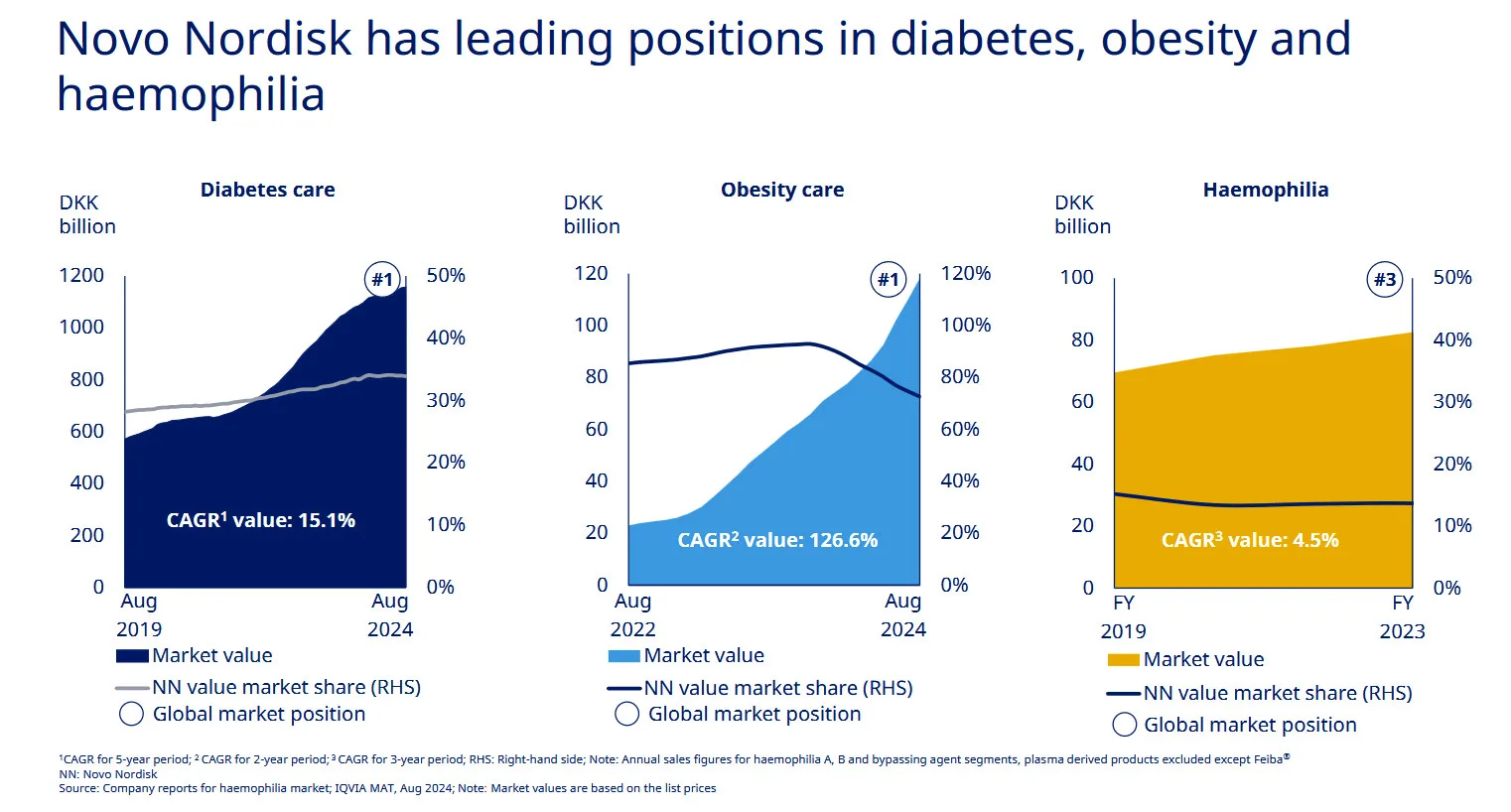
Strong Market Position: The company holds a leading position in the global insulin market, providing a solid foundation of recurring revenue. Why is this such an important market?
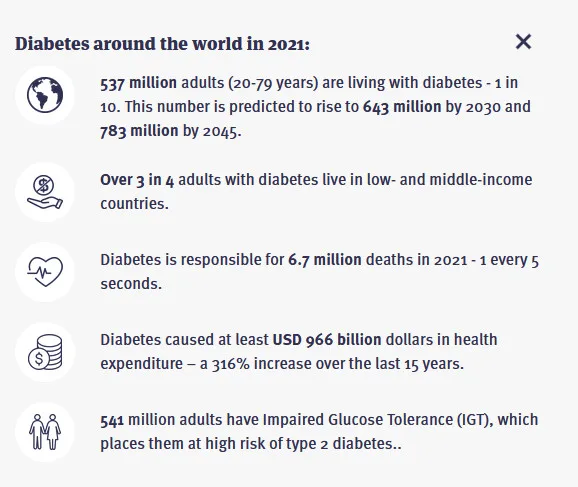
Diabetes and obesity are among the greatest medical challenges facing almost all societies worldwide. Both continue to grow at high rates, affect all age groups and cause considerable economic damage to the countries concerned, not to mention the individuals affected. Drugs to successfully treat these diseases are a major milestone in the health policies of many countries.
Innovation Pipeline: Novo Nordisk invests heavily in research and development (R&D), particularly in biologics and GLP-1 receptor agonists like Semaglutide, branded as Wegovy and Ozempic. This commitment to innovation underscores its long-term growth potential.
GLP-1 could become one of the biggest game changers in drug development, with some experts comparing it to the discovery of antibiotics. The Economist devoted its October cover story to it, highlighting Novo Nordisk’s drugs and the active substance group GLP-1 in general.

While the euphoria may prove premature, there is no denying that diabetes and obesity are among the world’s biggest health challenges. Effective treatment for diabetes and support for obesity prevention is a multi-billion dollar market. Novo Nordisk has a more than significant market share in both and is experiencing high growth rates in both.
Competitive Advantage (Moat)
Brand Recognition: With trusted brands such as Ozempic and Tresiba, Novo Nordisk enjoys strong market visibility among patients and healthcare professionals.
Economies of Scale: As a major player in diabetes care, Novo Nordisk benefits from cost efficiencies in manufacturing, R&D, and distribution.
Regulatory Barriers: The stringent requirements for pharmaceutical approval serve as a protective barrier, limiting new entrants and securing Novo Nordisk’s established market presence.
Competition:
Novo Nordisk’s biggest competitor is Eli Lilly (LLY), which also has a strong presence in diabetes and is making promising progress with its new weight-loss drug Zepbound. Both companies are in a neck-and-neck race for market leadership and are experiencing high growth rates.
I wrote about other ambitious companies in the middle of last year (see here). These include companies such as Amgen (AMGN), Altimmune (ALT) and Viking Therapeutics (VKTX).
Management Quality
Shareholder-Friendly Policies: Novo Nordisk demonstrates solid capital allocation through consistent share buybacks and dividend payments.
Long-Term Vision: The management’s commitment to R&D ensures the development of innovative and relevant therapies for years to come.
Novo Nordisk’s management demonstrates the following strengths in practice:
- Capital allocation: High dividends and strategic buybacks, on average 1.7% buyback over the last 10 years and a dividend yield of currently 1.83%.
- Long-term vision: Market leadership in diabetes and successful expansion into obesity treatments.
- Innovation: Continuous investment in R&D and breakthrough therapies such as Rybelsus.
- Sustainability: Exemplary CO₂ reduction and global social responsibility.
- Governance: Focused, shareholder-friendly leadership by an experienced management team.
CEO Lars Fruergaard Jørgensen has been in place since 2017 and has since initiated significant changes, such as the expansion into obesity drugs like Wegovy and other GLP-1 products. Under Jørgensen’s leadership, Novo Nordisk has more than doubled its market value since 2017 and has consistently delivered high returns on capital.
Financial Strength
Steady Growth: Novo Nordisk has consistently delivered revenue and earnings growth, driven by rising global demand for diabetes and obesity treatments. Sales and earnings growth has even accelerated in recent years, with a 10-year CAGR of 10% and a five-year CAGR of 15.7% on the revenue. For earnings, this figure has risen from 11.5% to an impressive 17% over the past five years.
High Margins: The company’s gross and operating margins are significantly above industry averages, reflecting cost efficiency and pricing power. The gross profit margin has been stable at over 80% for a decade, and ROIC is also well above average at 54.2%. In terms of cash flow, Novo Nordisk also generates an average of 30% free cash flow per year.
Strong Balance Sheet: With low debt and ample liquidity, Novo Nordisk is well-positioned to weather economic downturns.Despite strong revenue growth, the total debt burden has hardly changed over the past three years and has remained at a stable level of around $3.6 billion for the time being. The debt to equity ratio of 0.25 and the debt to assets ratio of 0.09 are also very low.
Recent News
Just recently Novo Nordisk faced a significant setback following the release of clinical trial results for its experimental weight-loss drug, CagriSema. The phase III REDEFINE 1 trial demonstrated an average weight loss of 22.7% among participants over 68 weeks, falling short of the company’s projected 25% target.
This shortfall led to a substantial decline in Novo Nordisk’s stock price. On December 20, 2024, the company’s shares plummeted by approximately 21%, marking one of the most significant single-day drops in its history. The share is therefore currently trading only marginally above the 52-week low and thus 44% below the all-time high from June 2024.
In the next section, we will take a closer look at whether this current discount is already sufficient to characterise this share as undervalued.
Valuation (Intrinsic Value)
The current price drop invites the question: Is Novo Nordisk worth a buy given its intrinsic value?
Cash Flow Assessment: The critical question for investors is whether Novo Nordisk can generate free cash flows to justify its current valuation. Has the fall in the share price taken NVO into a valuation region where a discounted cash flow analysis of the current value of a Novo Nordisk share can be considered undervalued?
Free cash flow recently totalled USD 9.828 billion and has grown at a multi-year average of 13.4%. Based on these assumptions, we can determine an intrinsic value per share of $81 based on the DCF valuation, which is almost exactly the current price of a Novo Nordisk share, which is trading around $82 at the time of writing.
Premium Multiples: The company often trades at a premium (high P/E and EV/EBITDA multiples). While this demands careful analysis, its consistent growth and high margins may warrant such valuations. In comparison to its closest peers, Eli Lilly, Sanofi (SNY) and Glaxo Smith Kline (GSK), the value fluctuates around $109, suggesting an undervaluation relative to its peers.
Looking at the average 10-year P/E ratio, Novo Nordisk is currently still trading at a premium ofjust 1,8% and would therefore be slightly overvalued.
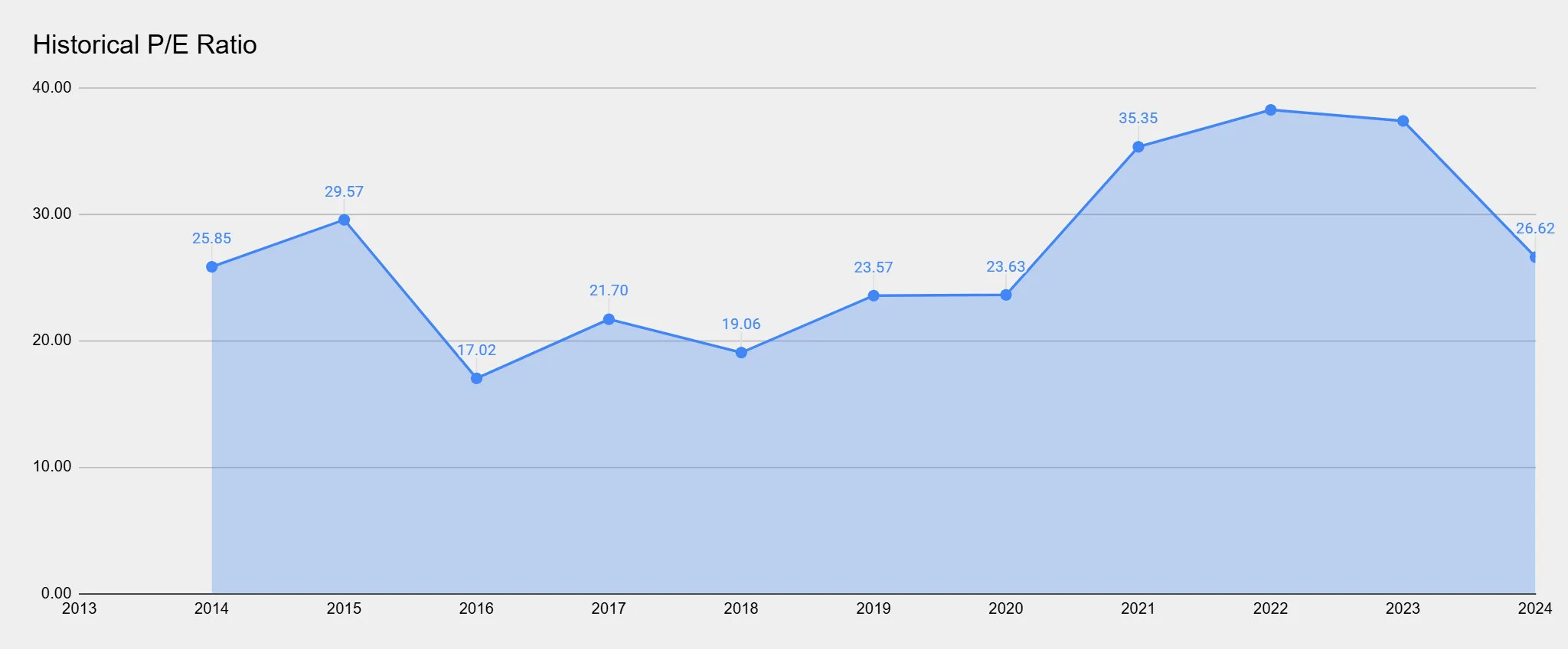
Compounding Potential: Novo Nordisk is often perceived as a “compounder,” capable of delivering long-term growth with stable profitability.
Over the past 10 years, the company has achieved a CAGR of around 10% for sales, profits and cash flow, and over the past five years this has increased to an average of 16% for all three categories. The pharmaceutical giant also has a very low level of debt, which has actually been reduced slightly over the past three years. The company’s return on invested capital (ROIC) has remained consistently above 50% for more than 10 years.
Risks and Challenges
Pricing Pressure: In key markets like the United States, pharmaceutical companies face political and regulatory pressure to lower drug prices.
Dependency on Core Products: A significant portion of revenue comes from a few key products, such as GLP-1 receptor agonists. Any setbacks in these products could impact overall performance.
Competition: Novo Nordisk faces strong competition from companies like Eli Lilly in the GLP-1 and insulin markets.
Conclusion: Is Novo Nordisk worth a buy?
Novo Nordisk meets many investment criteria:
- It boasts a robust market position, a wide economic moat, competent management, and a strong financial foundation.
- Its focus on long-term growth and innovation supports sustainable value creation.
All in all, Novo Nordisk is a very long-term managed and focused company with a clear market focus on diabetes, obesity and haemophilia, a very strong financial base and above-average growth rates. Trial setbacks cannot be ruled out in the future and could lead to further stock market corrections. In my view, however, this is unlikely to lead to a significant fundamental re-rating or sustained financial setbacks in the long term.
The key consideration is valuation. Novo Nordisk often trades at a premium, reflecting its market leadership and growth prospects. Most recent corrections have reduced the valuation considerably, but based on our valuations we can say that we are at a fair valuation for Novo Nordisk at the current price based on the fundamentals we have analysed.
As Charlie Munger famously stated, “A great business at a fair price is superior to a fair business at a great price.” For long-term investors seeking exposure to the healthcare sector, Novo Nordisk appears to be a compelling choice if its valuation aligns with future growth expectations.
Whether the current discount is sufficient, and whether Charlie Munger’s statement applies to Novo Nordisk, is a matter for each individual to decide, as with any investment.
You should do your own research and not blindly follow individual reports. My aim is to give you an understanding of my approach to company valuation and to enable you to make your own investment decisions.For long-term investors in the healthcare sector, Novo Nordisk may very well be worth a buy.