


Waking up this Monday and looking for your favourite brokerage app or a new outlet may have left many of you in a daze. The financial markets have experienced significant turmoil. In this article we will explore the primary factors driving this market crash, including Japan’s interest rate hikes, underwhelming US job growth, Federal Reserve policies, and geopolitical tensions. We also look at how Berkshire Hathaway’s strategic manoeuvres, the impact on cryptocurrencies and how we can all stay sane in this time of uncertainty and maybe even come out on top.
Japan’s Interest Rate Hike and the Nikkei Decline
Japan‘s decision to increase interest rates marks the end of a prolonged era of zero or negative rates. This change, while modest, has led to a significant drop in the Nikkei 225 index. The intervention aimed to stabilize the yen, which had depreciated considerably against the dollar. However, the lack of clear guidance on future rate adjustments has caused ongoing uncertainty in the market.
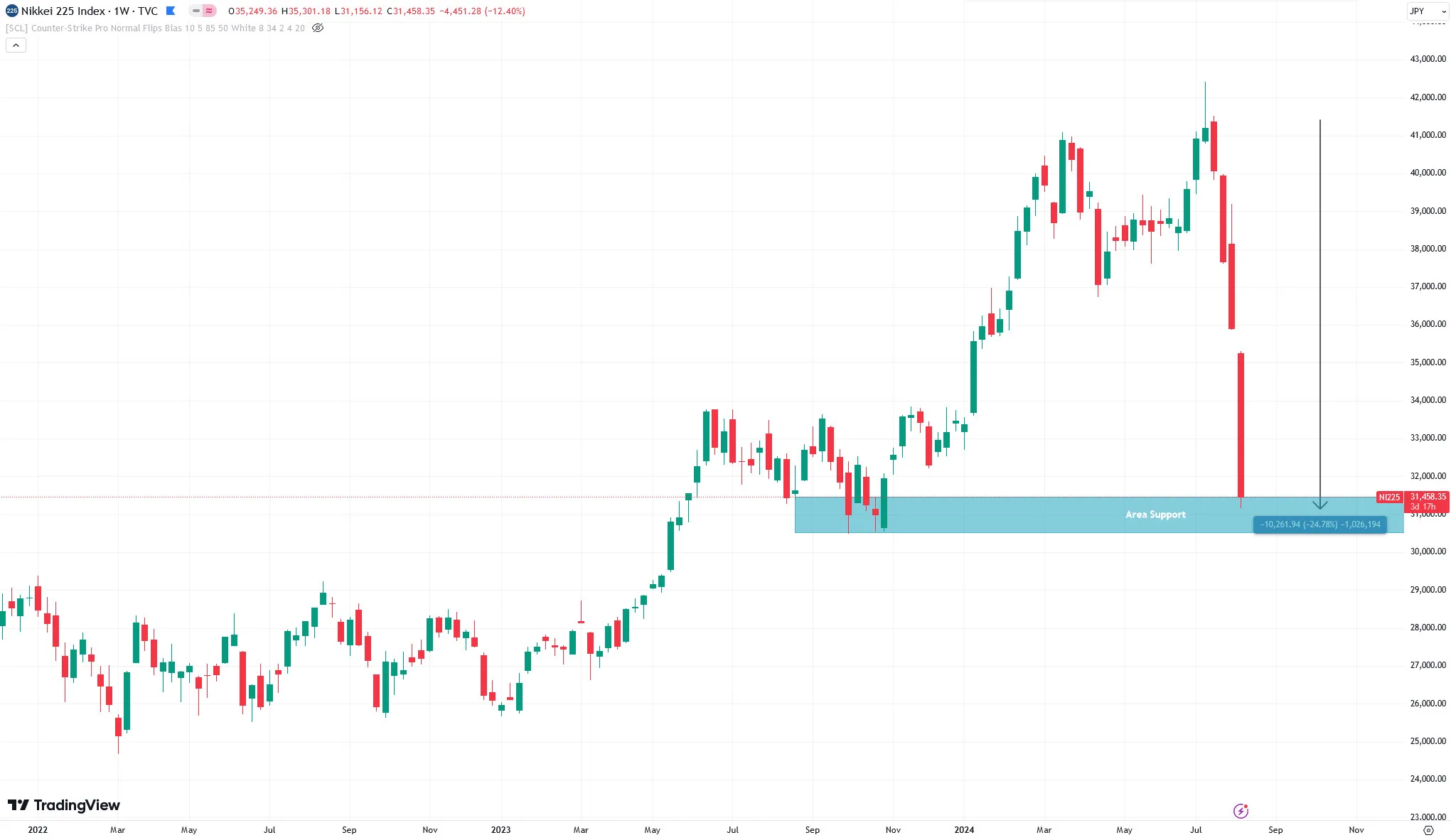
The yen’s depreciation had been driven by the divergent monetary policies of the Federal Reserve and the Bank of Japan. The Fed’s higher interest rates compared to Japan’s modest increases have widened the yield differential, putting downward pressure on the yen. As a result, Japanese equities, particularly those in the Nikkei 225, have suffered. Companies like Toyota, which benefit from a weaker yen through competitive exports, have seen their stock prices impacted as the yen briefly strengthened post-intervention.



US Job Rates and Economic Outlook
Job Growth Disappointment
The US job market has not met expectations, with job growth figures falling short of projections. This has raised concerns about the robustness of the US economic recovery. Lower-than-expected job growth can lead to reduced consumer spending and overall economic activity, contributing to market instability.
Economic Implications
The job market’s performance is a critical indicator of economic health. When job growth lags, it signals potential issues in various sectors, leading to decreased investor confidence. The Federal Reserve monitors employment data closely to make decisions about interest rates, and disappointing job figures can influence their policy direction.
Key-Facts
- Unemployment Rate Increase: The US unemployment rate rose to 4.3% in July, the highest in nearly three years, marking the fourth consecutive monthly increase.
- Slowdown in Hiring: Nonfarm payrolls increased by only 114,000 jobs, significantly below the expected 175,000, raising fears of economic vulnerability to a recession.
- Wage Growth: The increase in annual wages was the smallest in over three years, indicating cooling wage growth.
- Fed Rate Cut Expectations: The disappointing labor market data has led economists to expect the Federal Reserve to cut interest rates by 50 basis points in September.
- Sector-Specific Gains and Losses: The healthcare, construction, and leisure sectors saw job gains, while the information industry and financial activities sectors experienced job losses.
- Economic Indicators: The broader measure of unemployment rose to 7.8%, indicating increased underemployment and part-time work for economic reasons.
Federal Reserve’s Interest Rate Policies
Current Stance
The Federal Reserve’s policies continue to play a pivotal role in market dynamics. Higher-than-expected inflation has led the Fed to maintain a tighter monetary policy longer than anticipated, delaying potential rate cuts. This persistent high-rate environment has exerted additional pressure on the markets.
Market Reactions
Investors closely watch the Federal Reserve’s decisions, as interest rates directly impact borrowing costs, consumer spending, and corporate profits. The uncertainty surrounding the Fed’s future actions contributes to market volatility, as traders adjust their expectations based on new economic data.
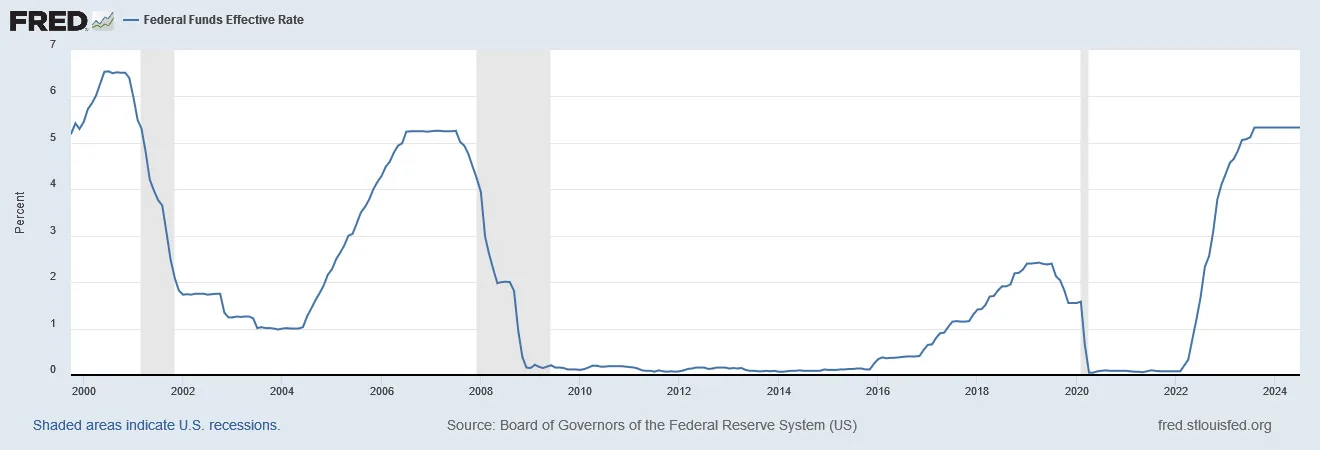
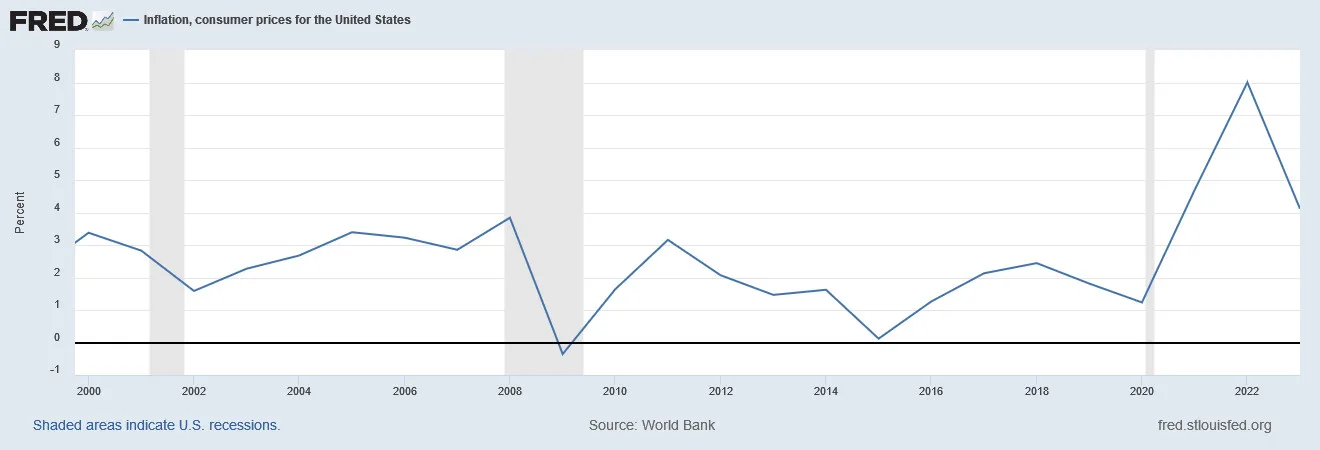
As you can see from the Federal Reserve chart, interest rates remain at high levels compared to the last 20 years. A prolonged plateau has historically led to falling stock prices, and the shaded areas on the chart indicate periods of recession in the US. If history is any guide, another period of lower equity prices or even some form of recession may be in the offing.
This will ultimately lead to falling interest rates and a boost to the financial markets. The main difference is that inflation remains a risk, even though it has declined, and central banks are on their guard and will eventually be caught between a slowing economy and a rise in interest rates. This makes the overall picture a bit fuzzy and we will be watching the FED’s next steps closely.
Geopolitical Tensions
Middle East Conflicts
Rising geopolitical risks, especially the escalating tensions between Israel, Iran, and Lebanon, with significant US involvement, have further complicated the global market landscape. These conflicts pose risks to global trade and energy supplies, contributing to broader economic uncertainties.
Broader Impact
Geopolitical instability can lead to disruptions in key industries, particularly energy. For instance, tensions in the Middle East often result in fluctuating oil prices, which can impact everything from transportation costs to manufacturing expenses. Investors typically react to these developments by moving capital to safer assets, which can drive market volatility.
Find more statistics at Statista
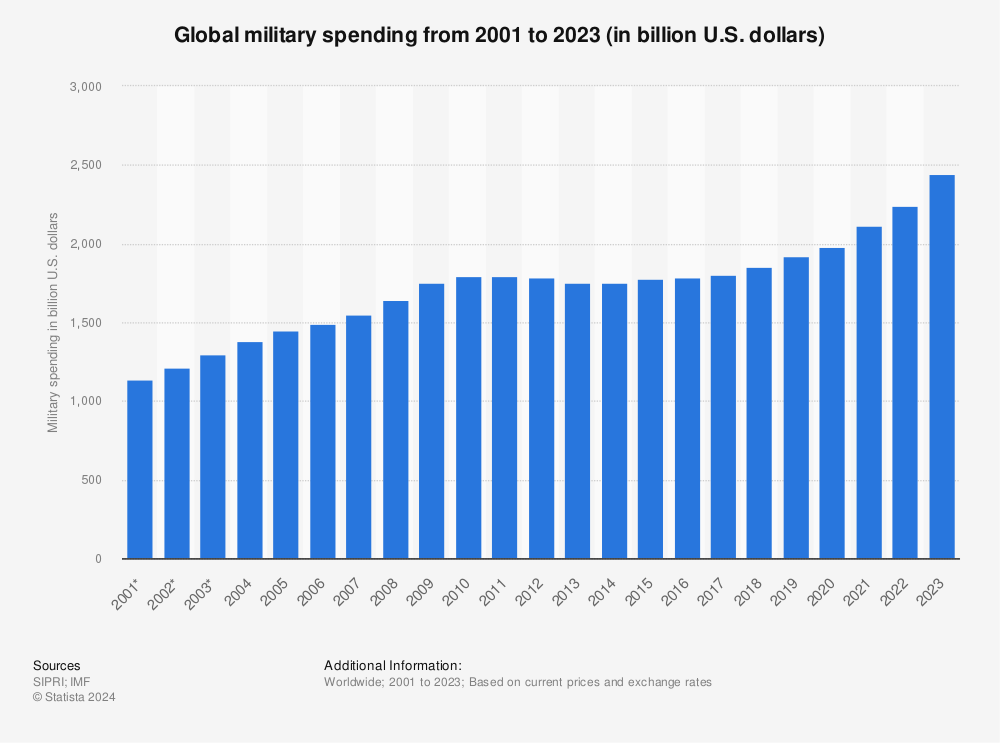
As tensions rise around the world, with Israel and Iran on the brink of war, investors tend to seek safe havens for their capital. In the past, commodities such as gold have acted as such. Since 2022 and a full-scale invasion of Russia, we have also seen a sharp rise in defence stocks such as Lockheed Martin, Raytheon or Rheinmetall. There is a good chance that we will see an ongoing trend in defence stocks as military spending has accelerated worldwide in recent years.
Berkshire Hathaway’s Strategic Positioning
Increased Cash Reserves
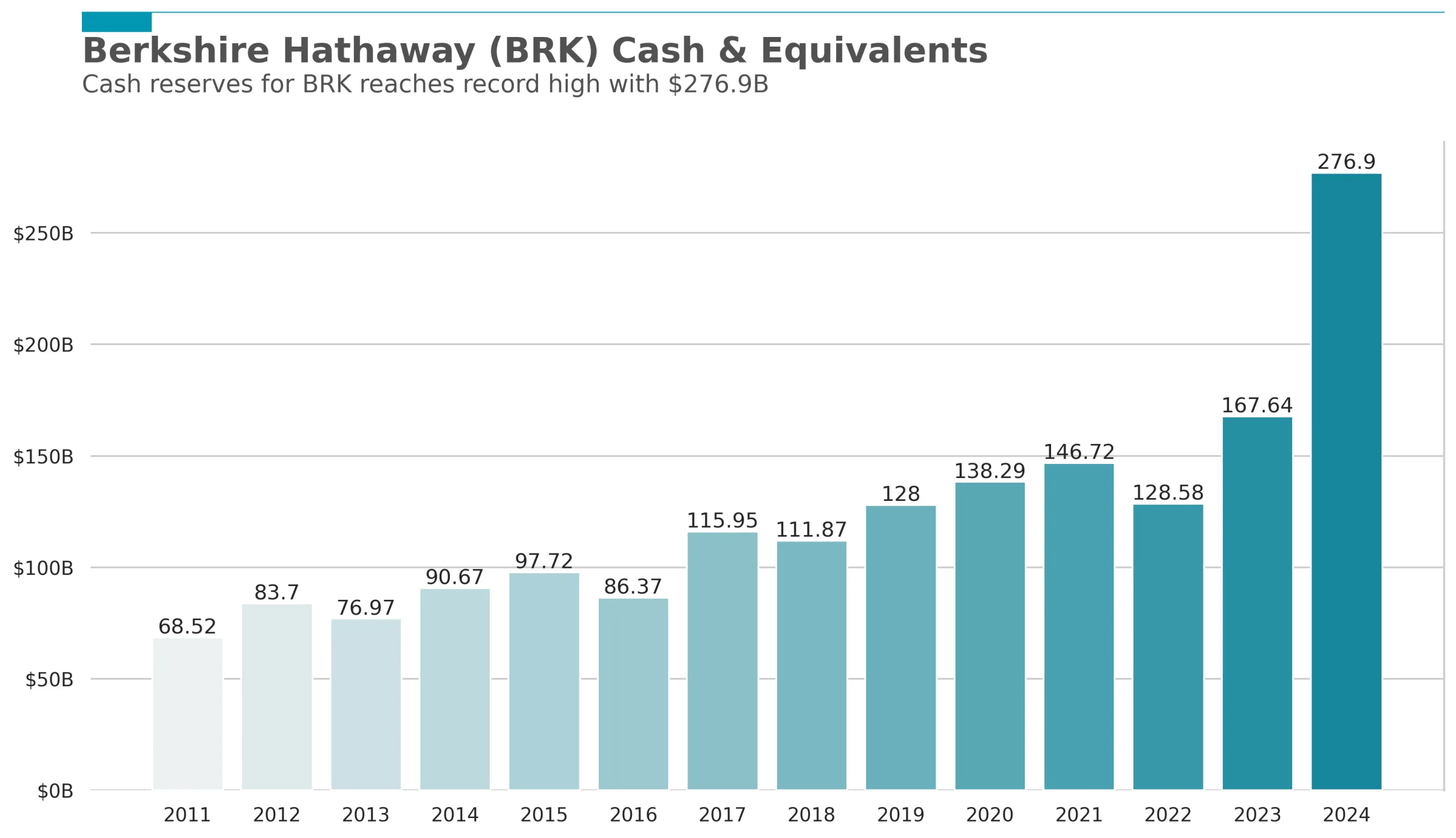
Warren Buffett’s Berkshire Hathaway has significantly increased its cash reserves, reaching new highs by selling several positions. This strategy highlights the importance of liquidity in uncertain times, allowing the company to remain flexible and poised to seize investment opportunities as they arise.
Buffett’s Investment Philosophy
Warren Buffett’s approach emphasizes the importance of having “dry powder” – cash reserves ready to deploy when attractive investments become available. This philosophy is particularly relevant during market downturns when asset prices may be undervalued.
Impact on Cryptocurrencies
Bitcoin and Ethereum Volatility
The cryptocurrency market has mirrored traditional markets in its volatility. Both Bitcoin and Ethereum have seen significant price swings, reflecting broader investor sentiment and risk aversion. While some view this as a buying opportunity, others remain cautious given the uncertain economic backdrop. We saw significant declines in the leading cryptocurrencies, bitcoin and ethereum. Bitcoin is down 16% this Monday and Ethereum is down almost 30% since Sunday.
Long-term Outlook
Despite short-term volatility, the long-term outlook for cryptocurrencies remains a topic of debate. Proponents argue that digital currencies offer a hedge against traditional market risks and inflation, while critics highlight regulatory and stability concerns.
The recent approval of an Ethereum ETF seems to be just the next step for cryptocurrencies to be adapted by the financial community and for a promising outlook on valuations. Nonetheless, this is a process that is being driven by those who support the idea of crypto and those who oppose it. We cannot be sure that there will not be setbacks in the future. Overall, I remain bullish on crypto, especially the big players like BTC and ETH. If you have a similar view, the current situation could be an opportunity to add to your positions at a good price. Remember to always manage your risk, nobody knows if the bottom is in yet.
Navigate the Situation
We can take Waren Buffet and Berkshire as examples: Even if we cannot always foresee these sudden crashes, we would be well advised to keep an adequate reserve of liquid funds. Even in turbulent times, we should steadily increase these reserves and take profits from time to time. Indicators for increasing your cash reserve can be: high interest rates, geopolitical crises, rising unemployment and stock markets that are already very highly valued (CAPE ratio / MCAP to GDP).
If you have a very long-term investment horizon, the coming days and weeks could be an opportunity to add to your existing position at a bargain price and reduce your average entry price.
“Be Fearful When Others Are Greedy” – Warren Buffet
To put things in perspective, previous so-called “crashes” have had a much greater impact on global markets, it is easy to panic, especially if you follow the news and social media platforms X (formerly Twitter) closely – they thrive on gloom and doom. The truth is usually somewhere in the middle. So far, the SP500 is down around 10%. In 2020, when Corona hit, the index fell 36%. During the financial crisis, it fell 58%. Of course, that happened over the course of a few weeks and we cannot be sure that the same is happening now. We need to watch the markets closely and avoid rushing to judgment.
More often than not, it is wise to stay away from the doomsayers who see the next black swan around the corner every other day. Take a step back and think about your next steps, try to take the contrarian position of the majority and act accordingly – see this article by Lyn Alden if you want to read more about contrarian investing.